
Frequently Asked Questions
Per our insurance policy all riders must be 250lbs or less.
All riders must be 8 years old as a minimum age, and all riders must be single riders on the horses per our insurance policy.
Horseback tours leave from McMillian Woods Youth Campground. CLICK HERE for directions.
The Battlefield South Carriage tour leaves from 2190 Emmitsburg Rd. CLICK HERE for directions.
The Battle for Culp's Hill Carriage tour leaves from 1 Lefever Street. CLICK HERE for directions.
The Howard Avenue Carriage Tour leaves from 1 Lefever Street. CLICK HERE for directions.
Car tours leave from the State of Maryland Monument. CLICK HERE for directions.
Please note, you MUST pre-book your tour.
These links will also be provided in your confirmation email.
We strive to have all of our rides be as safe as possible. Sometimes the weather is dangerous for our guests and our horses. If there is a need to cancel the ride for these reasons we will credit your account or issue you a refund.
All riders must wear closed-toed shoes. Riders under the age of 18 MUST wear a helmet (we have plenty). Long pants are highly recommended. In the summer we recommend sunscreen, In the fall we say bring layers!
Dogs cannot accompany the tours. Special accommodations can be made prior to booking for those with medical service animals (ADA), please call with any questions.
Refund/Rescheduling Policy
**Rescheduling**
Rescheduling your tour may be possible depending on the number of days prior to your tour date. Because your space is being guaranteed at the event, rescheduling is done on a case by case basis.
**Refunding**
Refunding amounts are based on the number of days prior to your schedule tour the cancellation is made.
Once purchased, tickets cannot be refunded or rebooked without texting or calling us. Rebooking is possible, but not guaranteed and must be done a week prior to your reservation unless impossible situations arise; call 717-476-7428 or text and we will take care of what you need as best we can.
**Less than 2-days: Tours canceled less than 48 hours from the scheduled tour will be charged the full purchase price unless we are able to resell your tickets;**
**In the case that we are able to resell your seats you will be refunded in full.**
Need more information? Email us directly at horsetoursgettysburg1863@gmail.com.
Heat Policy
Horse Evaluation for Activity and Temperature (HEAT) Policy
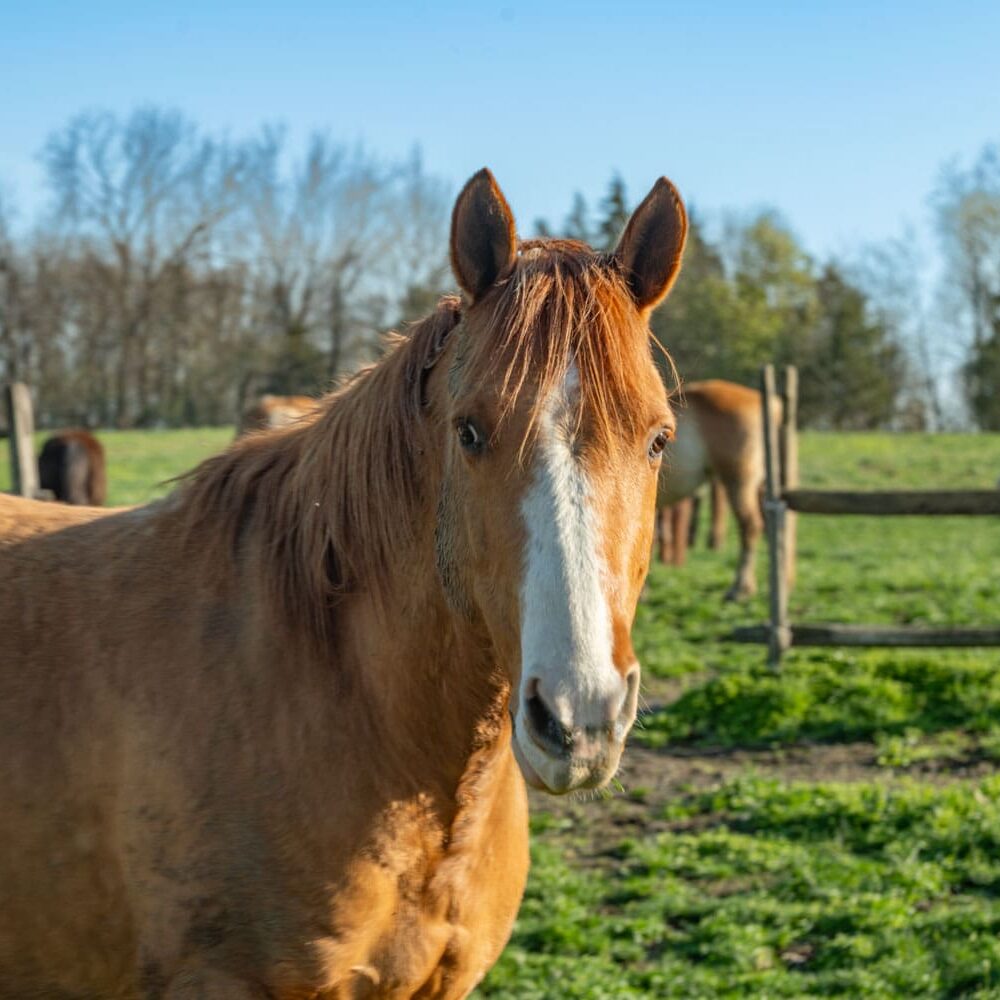
To ensure the continued health and wellbeing of the animals of Horse Tours of Gettysburg (Confederate Trails and Victorian Carriage Company) a proactive process was developed to monitor not only the weather, but the animal’s tolerance of changes in temperature according to their fitness and conditioning.
Knowing that most policies are developed solely by evaluating the single component of weather, Horse Tours of Gettysburg understands that the greater concern is the animal’s tolerance and reaction to weather. Multiple factors affect the animal’s tolerance to heat (conditioning, hydration, type of feed, age, duration of exposure and activity type & length as well as the environment where the activity will be performed – shade vs. full sun).
Therefore, although Horse Tours of Gettysburg does have a “top-out” temperature at which horse activities are cancelled or postponed, we also monitor and perform assessments of the animals themselves well before that temperature is reached to evaluate the response to the environmental fluctuations. This is done by monitoring the vital signs (Temperature, Heart Rate and Respiratory Rate) of the animals being used and comparing it to baseline findings to assess for trending changes in the animal’s response to the environment.
Procedure:
-
The forecast for the day is evaluated so that the staff can be alerted to possible environmental risks.
-
Staff are encouraged to use their smartphones to monitor ambient temperature.
-
All staff have been advised as to which is the weather source that will be used by Horse Tours of Gettysburg so that there will be consistency in readings among all employees.
-
When the ambient temperature reaches 85 degrees, staff are alerted, and increased monitoring of the animals begins.
-
Carriage operations – monitoring is performed on both animals that make up the “team” for each carriage.
-
Horseback tours – monitoring is performed on random samplings of horses that are tasked for that day’s activities.
-
Vital sign assessments may be performed as frequently as hourly, depending on the workload of the day, and the rate of ambient temperature change.
-
Animals’ vital signs are compared to established expected readings for animals performing activity (see table 2 of Supporting Documentation).
-
Work/rest cycles are adjusted as needed in response to the animal’s most recent clinical assessment.
-
When clinical findings show that the stress to the animal is beyond that of normal exercise, appropriate interventions are implemented.
-
When ambient temperatures exceed sustained 92.5 degrees and/or clinical assessments of the animals indicate a prolonged return to resting vital sign assessment (greater than 20 minutes after exercise is stopped), horse activities will be stopped or postponed.
VITAL SIGNS ASSESSMENT: H.E.A.T. POLICY PROCEDURES AND DAILY PROTOCOLS
Horse’s vital signs are to be Monitored AND Recorded DAILY
-
This is to establish each horse’s individual baseline readings at various states of activity and rest.
- Before EVERY tour, Halfway point, End of tour and Every 10 min after as needed
- Record temps into GROUP MESSAGE:
Horse Name, Time, Ambient Temp, Rectal Temperature Reading & Horse’s Activity
T - TEMPERATURE
normal 99.5 - 103°F
To check: Take the horse’s temperature rectally with a digital thermometer.
Record Date, Time, Outside Temp, Activity
Environment can affect reading by 0.5-1°F
Exercise, stress or infections raise temperature
Horse’s Temperature 103°F and above can be an emergency situation.
Staff on site is to make immediate cool down of the Horse priority #1.
*→IF ELEVATED: Alert manager, start water cool down, follow all directives., Assess next set of vitals: Check PULSE
P - PULSE
normal 40-44 beats/min
To check: Take your horse’s pulse from an area under the jaw, beneath the tail at its bone or from an area on the side of the foot.
Count for 15 seconds, then multiply count by 4 = Pulse Rate
→Record Pulse Rate, Assess next set of vitals: Check RESPIRATION
R - RESPIRATION
normal 8-16 breath/min
To check: Watch or feel your horse’s ribcage/nostrils for one minute. Be sure to count 1 inhale and 1 exhale as one breath (not as two).
Respiration rate should NEVER exceed pulse rate
Wait at least 30 min after work to attempt to check respiration rate
→Record rate, update manager, Assess next set of vitals: Check GUT, Hydration & CAP REFILL
GUT SOUNDS
normal – gurgling noises
alert manager – absence of noises
To Check: Press your ear up against your horse’s barrel just behind his last rib. Be sure to check from both sides.
DEHYDRATION
Horse’s drink a min of 5gal of water/day
Horse’s in heavy exercise or hot conditions can drink up to 18gal. of water/day
Pinch the skin on your horse’s neck
-
It should flatten back in 1 sec
CAPILLARY REFILL TIME
To check: Lift your horse’s upper lip up and firmly press your thumb against his gums for 2 seconds to create a white mark.
Normal refill time is 1–2 sec
These simple checks will help monitor our horses for soundness and see signs of distress before a situation becomes dangerous.
Being able to relay to the Vet these simple but crucial parameters during a time of concern can help situations from becoming emergencies.